Thriving Adoptees Host Simon Benn on Why Trauma Hides Us But Never Harms Our True Self
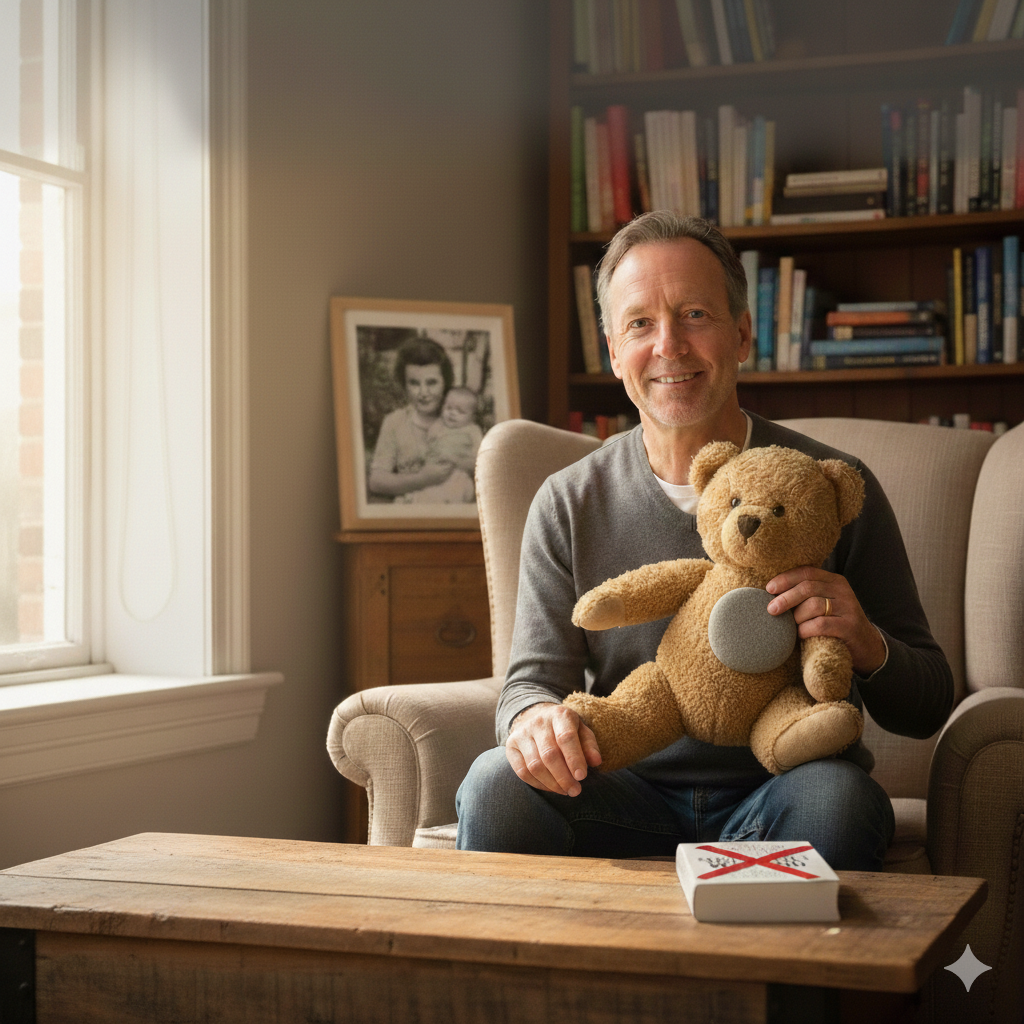
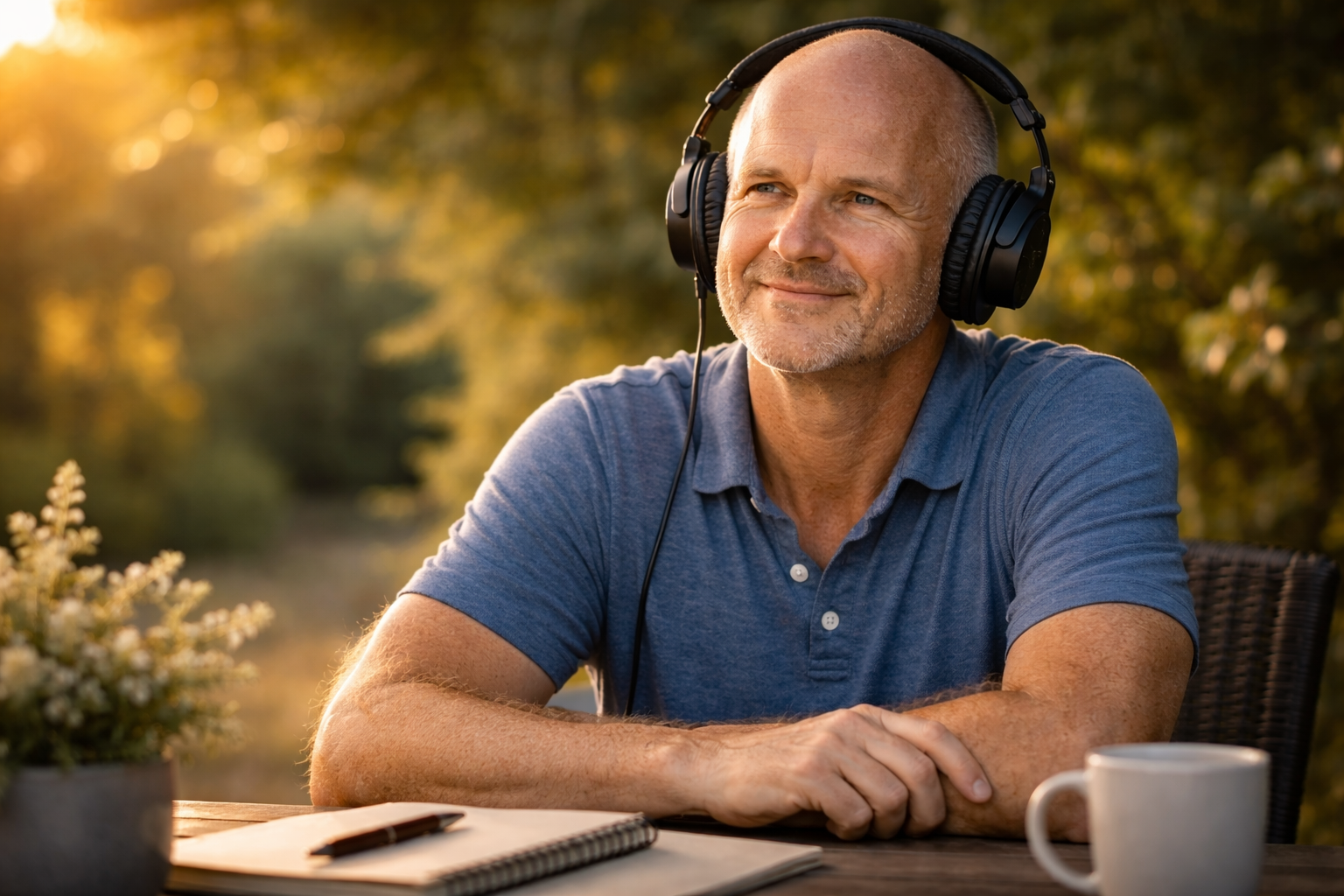
Simon Benn has spent years helping adoptees find their way to wholeness. As the creator and host of Thriving Adoptees, a podcast with over 620 episodes, he's interviewed hundreds of adoptees and adoption professionals. His approach centers on a belief that runs counter to much of what the adoption community has accepted for decades: who we truly are cannot be wounded. In this episode of Voices of Adoption, host Donna Pope speaks with Simon about his adoption story, a teddy bear that became a bridge to his birth mother, and the metaphor he developed to challenge one of adoption's most influential theories.
A Teddy Bear Held the Truth
Simon was adopted from Liverpool in early 1967. His adoptive parents collected him from an adoption council, and he grew up near York, England, in a tiny village without even a pub. His childhood memories are ordinary in the best sense: making a house from a cardboard box, annoying his dad while he was on the phone, trying to get a sugar crust on his oatmeal. He knew he was adopted. It was never hidden. But unlike many adoptees, Simon didn't spend his childhood wondering about his birth mother. He didn't feel rejection. He didn't ask questions. That changed at 40. His parents brought him a box of items he'd left behind when he moved out at 22. Inside was a teddy bear he'd had since childhood. What he didn't know until that moment: the teddy bear was from his birth mother. The revelation triggered something unexpected. For the first time in his life, Simon had a thought he'd never considered before. She didn't love me enough to keep me. This teddy bear was a consolation prize from a woman who didn't want me. The thought lasted about ten seconds.
A Counselor Changed Everything
Simon shared those words with a counselor. Her response was simple: "I'm a mum, Simon, and I don't think that would have been true." He saw the truth in what she said. At a logical level, he understood his birth mother hadn't given him away because she didn't love him. But understanding something intellectually and feeling it in your body are different experiences. Research supports the value of therapeutic intervention for adoptees processing complex emotions. According to the American Psychological Association, while adoptees generally fare well in adulthood, they report higher rates of mental health challenges than the general population, making access to adoption-informed support essential. That logical understanding stayed with Simon for over a decade. Then came the letter.
Her Love Became Undeniable
In the UK, adoption records have been open since 1975. Simon eventually requested his file. Inside were letters from his birth mother to the social worker handling his case, notes from interviews conducted in 1966, and correspondence between the agency and his adoptive parents. Reading his birth mother's letter, Simon felt something shift. "I felt her pain. I felt her love for me as a visceral whole body experience. The tears were running down my face, and I realized that she loved me." He describes what happened next as a merging. "She was me and I was her, and we were one. There was no separation between us." That moment became foundational to his understanding of adoptee healing. The brief thought at 40 that his birth mother didn't love him was completely wrong. The letter proved it. But more importantly, he felt it.
Happiness Lives Inside Already
Before focusing on adoptees, Simon tried several ventures, all centered on happiness. Happiness for small business owners. Happiness for corporations. Happiness for kids. Each attempt taught him the same lesson: happiness is an inside job. "We're looking outside and we're looking in the wrong place," Simon explains. "Our natural happiness is veiled. It's hidden by our conditioning. It's hidden by trauma. It's hidden by our feelings. It's hidden by our beliefs that it lies outside us." He points to cultural assumptions as examples. In the UK, people speak of "miserable weather" as though external conditions determine internal states. We learn to believe that circumstances control how we feel. Simon argues the opposite is true. For adoptees, this matters because relinquishment trauma can compound over time. What begins as the pain of separation can grow when an adoptee feels they don't fit with their adoptive family. It grows further when they encounter other angry adoptees online. It grows again when they learn about problematic practices in adoption history. "The trauma snowballs," Simon says.
Rock Beats Scissors Every Time
Simon's most distinctive contribution to adoption discourse is his rock-paper-scissors metaphor. It's a direct response to Nancy Verrier's Primal Wound, a book published in 1993 that has shaped how millions of people understand adoption trauma. Verrier proposed that separation from birth mothers causes a wound that is psychological and spiritual, lifelong, and characterized by insecurity and difficulty fitting in. Many adoptees found validation in her framework. Simon did too, initially. "My own experience was relief," he recalls. "I thought, this explains everything.
And then fast on the heels of that relief was a sense of doom. I thought, I'm stuck with this primal wound." Then came a different realization: who we truly are is unwoundable. His metaphor works like this. In rock-paper-scissors, rock represents our true self, our essence, what Richard Schwartz calls the "uppercase S" Self. Verrier would place scissors as the metaphor for trauma, something that cuts and wounds. But scissors can't cut rock. Simon proposes paper instead. Paper wraps rock. Paper wins, until the paper is unfurled to reveal the rock underneath, untouched. "Trauma hides us. It doesn't harm us. Trauma conceals us. It doesn't cut us."
The Science Supports Healing
Simon isn't alone in this perspective. He draws on the work of Richard Schwartz, creator of Internal Family Systems (IFS) therapy, which has emerged as a promising treatment for trauma, depression, and PTSD. According to research published in Clinical Psychologist, IFS has shown effectiveness in developing self-compassion and self-forgiveness, two qualities essential for adoptee healing. He also references Peter Levine, developer of Somatic Experiencing, a body-oriented approach to trauma resolution. Levine's work has been taught to over 30,000 therapists in 42 countries and focuses on releasing trauma stored in the body rather than just processing it cognitively. Levine's phrase captures Simon's philosophy perfectly: "Trauma is a fact of life, but it's not a life sentence." The IFS Institute reports that emerging evidence from clinical trials shows positive outcomes for depression, PTSD, and chronic pain, with multiple studies demonstrating increases in self-compassion. A randomized controlled trial published in the Journal of Rheumatology found that IFS-based intervention improved pain, physical function, and depressive symptoms, with benefits sustained one year after treatment.
Getting Unstuck Takes Work
Simon acknowledges that moving from understanding to feeling requires effort. He uses the language of insight, epiphany, and "doing the work." Therapy, reading, podcasts, personal growth. All of it matters. "Getting unstuck, whether we're an adoptive parent or whether we're an adoptee or whoever we are, growth is about doing the work," he says. For adoptive parents, he offers a specific insight learned from his interviews: raising an adopted child isn't about fixing the kid. It's about the parent's own growth, their ability not to take their child's trauma personally, and to respond with patience rather than defensiveness. For adoptees, the path involves recognizing that beliefs formed in childhood, often without words or conscious thought, can be replaced. A five-week-old infant doesn't think. He experiences. At some point, that feeling of loss gets connected to meaning. The bond forms. And it stays until an insight of sufficient depth breaks it.
Thriving Is Possible
Simon's message stands in contrast to frameworks that emphasize permanent damage. He doesn't deny that trauma exists or that adoptees face unique challenges. He simply believes the core of who we are remains intact beneath whatever has been layered on top. His 620-plus episodes of Thriving Adoptees represent years of conversations with people who have found their way through. Not around. Not over. Through. Research from Palo Alto University confirms that young adult adoptees surveyed 10 to 15 years after leaving the child welfare system reported strong feelings of belonging with their adoptive families and felt hopeful about their futures. The picture isn't uniformly dark. For those feeling stuck in the primal wound narrative, Simon offers an alternative. The rock is still there. The paper can be unfurled. Who you truly are has never been touched.
Looking for support on your adoption journey? Visit VoicesofAdoption.org for support, resources, and community from every corner of the adoption constellation. Subscribe to the Voices of Adoption show for real stories and resources that help families across the adoption constellation find support and for expert insights on adoption wellness.
#ThrivingAdoptees #SimonBenn #AdopteeHealing #PrimalWound #TraumaRecovery #InternalFamilySystems #SomaticExperiencing #AdoptionAwareness #AdopteeVoices #MentalHealthMatters #AdoptionCommunity #HealingTrauma #VoicesOfAdoption #RockPaperScissors #AdopteeWellness
Follow or Subscribe to Voices of Adoption on your favorite platform:-
Website: VoicesofAdoption.org | YouTube: @VoicesofAdoptionShow | Twitter/X: Voices_Adoption | Instagram: Voicesof_Adoption | Facebook: Voices of Adoption | TikTok: @Voices_of_Adoption | LinkedIn: @Voices-of-Adoption
Follow Nathan Gwilliam - LinkedIn: @nathangwilliam
Follow Donna Pope - LinkedIn: @donna-pope-41652ba
Follow Simon Benn - LinkedIn: @SimonJBenn | Website: ThrivingAdoptees.com | Email: simon@thrivingadoptees.com