Speech Pathologist Reveals the Hidden Connection Between Adoption Trauma and Picky Eating
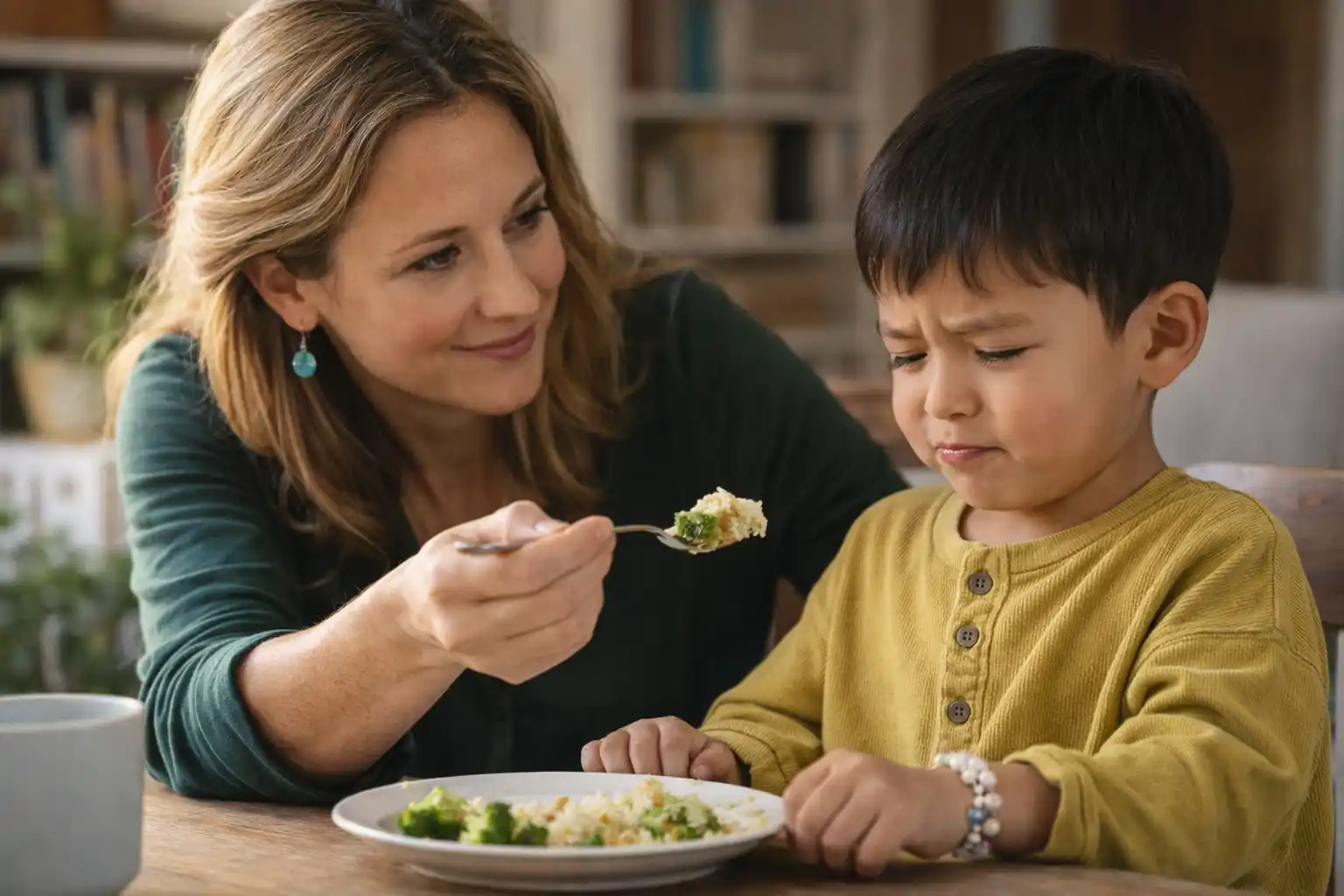
Most parents expect a few food battles. A rejected vegetable here, a tantrum over texture there. But for adoptive families, feeding challenges often run much deeper than preference. They tap into a child's nervous system, their early experiences, and a gut-brain connection that science is only beginning to fully understand.
Lena Livinsky is a speech pathologist, holistic feeding specialist, host of the Livin'sky Podcast and the creator of the BLOOM framework, a five-part approach to childhood feeding that looks beyond behavior and into biology. In this episode of Voices of Adoption with host Donna Pope, Lena breaks down why so many adopted children struggle at mealtimes, what parents are missing, and how her own health crisis became the catalyst for helping other families heal.
Feeding as a Developmental Process
Adopted children enter their families at various stages of development, and the feeding process they walk into is already complex. Transitioning through bottle feeding, solids introduction, texture progression, and independent eating requires neurological coordination, oral motor skill development, and a sense of safety that not every child has had the chance to build. Studies suggest that up to 50 percent of children under age two meet criteria for picky eating, and for children with developmental challenges or early trauma, that number climbs even higher. Research shows that nearly 80 percent of children with developmental issues also experience feeding problems, making this a critical consideration for adoptive families.
Lena emphasizes that when a child shows fear at the table rather than simple defiance, something physiological may be happening beneath the surface. Pain during eating, swallowing difficulties, constipation, allergic reactions, and sensory overload can all masquerade as "pickiness." Without a holistic assessment, these root-causes go unaddressed and can snowball into long-term aversion patterns. Research confirms that picky eating persists for more than two years in 40 percent of affected children, meaning early intervention matters far more than the common "wait it out" advice most pediatricians offer.
For adoptive families specifically, the feeding process carries additional emotional weight. Many adoptive mothers did not have the opportunity to breastfeed, which means the earliest food-based bonding experience already looks different. Donna Pope shares on the episode that she vividly remembers the uncertainty of those first feeding moments with her own adopted children. The gap between expectation and reality can feel disorienting for parents who want desperately to nurture through food but find their child resistant, fearful, or disconnected at the table.
The BLOOM Framework Explained
Lena's approach to feeding challenges is organized into five areas, each designed to identify what's actually out of balance before jumping to behavioral interventions.
Balance Health examines the child's medical history, looking for appetite-disrupting conditions, pain during eating, respiratory issues, or anything that makes the body unready to eat safely
Learned Oral Motor Skills assesses jaw strength, chewing ability, food breakdown, and safe swallowing, areas where speech pathologists have deep clinical expertise
Optimal Microbiome addresses the gut-brain connection since research confirms that approximately 90 percent of the body's serotonin is produced in the gut, directly influencing mood, cravings, and food preferences
Open Exploration focuses on creating a low-pressure environment where children can engage with food through preparation, sensory play, and gradual exposure without force
Mealtime Boundaries introduces age-appropriate expectations so children understand what's asked of them while still feeling safe and respected at the table
This system allows parents and clinicians to pinpoint which layer needs attention first rather than defaulting to "they'll grow out of it." For adopted children who may carry additional neurological and emotional weight around food, this specificity matters.
Unique Challenges for Adopted Children
The adoption journey itself introduces variables that can complicate feeding in ways most parenting books never address. Separation from birth parents can dysregulate a child's nervous system before they ever sit in a high chair. Prenatal drug exposure, inconsistent early care giving, and institutional feeding environments all shape how a child relates to food. Developmental trauma symptoms in adopted children frequently include problems with sleeping, eating, and over reactivity to sensory stimulation, according to trauma researchers studying relinquishment and early adversity.
Lena points out that eating is one of the most vulnerable acts a human performs. It requires letting your guard down, sitting still, allowing something foreign into your body, and trusting the environment enough to swallow. For a child whose early life taught them the world is unpredictable, that level of trust doesn't come automatically. This is why Lena places connection at the root of her entire framework. Before any food strategy can work, the child needs to feel safe with the person feeding them.
She encourages parents to become students of their child's body language, noting that the vast majority of human communication is nonverbal. Babies and toddlers cannot articulate discomfort, but they show it constantly through tension, avoidance, startling, and shutting down. Something as simple as the noise level in the room, the position of a door, or the parent's own stress response can shift a child's entire relationship with the meal in front of them. Lena used to run the kitchen hood fan for her son because the white noise regulated his nervous system during feeding. That kind of specificity only emerges when a parent slows down enough to observe rather than react.
A Mother's Gut-Healing Transformation
Lena's expertise in holistic feeding didn't develop in a vacuum. After a miscarriage in 2019 and the birth of her son, she experienced severe postpartum depression, autoimmune psoriasis flare-ups, and stubborn weight gain that no amount of exercise could touch. Research shows that postpartum depression diagnosis rates have more than doubled over the past decade, rising to nearly 1 in 5 mothers — and the condition often goes unrecognized for months or years.
After weaning her son at over two years, Lena began the GAPS (Gut and Psychology Syndrome) diet, built around nutrient-dense meat stock soups designed to heal intestinal permeability and re-balance gut bacteria. The protocol, developed by Dr. Natasha Campbell-McBride eliminates carbohydrates and sugar to starve harmful gut bacteria while flooding the body with minerals, amino acids, and vitamins through slow-cooked meat stocks. Unlike bone broth, which requires 8 to 24 hours of cooking and can be difficult for compromised guts to process, meat stock cooks in under three hours and is far easier to digest.
Within a week and a half, Lena's emotions returned after years of feeling flat. She describes the experience as suddenly feeling both highs and lows again after an extended period of emotional numbness. She lost 50 pounds over six months and saw fungal issues, skin conditions, and mood disturbances begin to resolve. Her experience reinforced what she already understood clinically, that the gut drives far more than digestion, and that healing it can transform a person's entire quality of life. She has since added a lectin-free protocol to continue healing her gut lining at the mucosal level, which she believes is necessary given the toxic load most people carry in modern environments.
Oxygen Mask on First
For adoptive parents running on empty, Lena's advice is direct. You cannot offer stability, patience, and attunement at the dinner table if your own body and nervous system are depleted. Self-care is not a luxury. It might look like a walk during nap time instead of scrolling, a bath when the house goes quiet, or simply choosing to eat in a way that supports your own gut health. The goal isn't perfection. It's recognizing that a regulated parent creates a regulated environment, and a regulated environment is where children learn to eat, attach, and trust.
This applies equally to the generational patterns parents bring to the table. Lena and Donna discuss how many adults were raised in households where cleaning your plate was mandatory and food waste was treated as moral failure. Those lessons, rooted in scarcity, war, and cultural survival, don't translate well to a child who needs permission to listen to their own body. Quality matters more than quantity, and allowing a child to stop eating when they feel full is not permissive parenting. It's building the foundation for a lifelong relationship with food that is guided by internal cues rather than external pressure.
Ready to discover where your child's feeding challenges actually stem from? Take Lena Livinsky's picky eating quiz on her website and subscribe to Voices of Adoption at VoicesOfAdoption.org for more conversations that help adoptive families thrive.
Follow or Subscribe to Voices of Adoption on your favorite platform:-
Website: VoicesofAdoption.org | YouTube: @VoicesofAdoptionShow | Twitter/X: Voices_Adoption | Instagram: Voicesof_Adoption | Facebook: Voices of Adoption | TikTok: @Voices_of_Adoption | LinkedIn: @Voices-of-Adoption
Follow Nathan Gwilliam - LinkedIn: @nathangwilliam
Follow Donna Pope - LinkedIn: @donna-pope-41652ba
Follow Lena Livinsky - LinkedIn: @LenaLivinsky | Website: LenaLivinsky.com | Podcast: LenaLivinsky.com/Podcast | Tictok: @LenaLivinsky | Instagram: @Lena.Livinsky | YouTube: @LenaLivinsky | Pintrest: LenaLivinsky | Facebook: LivinskyLena
#VoicesOfAdoption #PickyEating #AdoptiveParenting #FeedingChallenges #BLOOMFramework #GutBrainConnection #AdoptionTrauma #HolisticHealth #TraumaInformedParenting #GutHealth #SpeechPathology #AdoptionSupport #PostpartumDepression #AdoptionCommunity #ChildDevelopment