They Wanted Closed Adoption Until Education Changed Their Minds
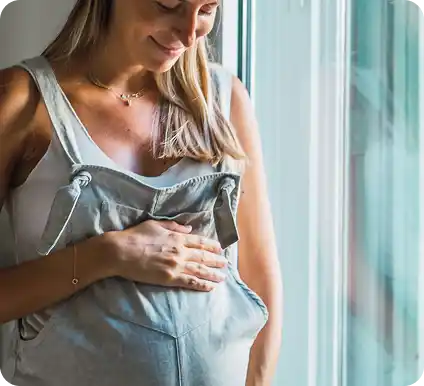
Ashley Felton was diagnosed with endometriosis years before she and her husband Eric ever used the word adoption in a context that applied to their own lives. She had surgery to address it. She spent months on hormone treatments that sent Eric's temper into territory he had never experienced. She went through four rounds of intrauterine insemination, the last of which ended in a complication so severe that her fertility doctor ended treatment entirely. Then, the day after Christmas, she had a hysterectomy. That was the day biological children became a door that would no longer open.
In this episode of Voices of Adoption, host Donna Pope sits down with Ashley and Eric Felton just 32 days after bringing home their son Colton. They walk through the full arc: the grief of infertility, the $80,000 financial reality of private domestic adoption, and the shift in their thinking about open adoption that started as reluctance and ended with Ashley crying for an hour in an Airbnb out of sheer love for Colton's birth parents. This is a story about what it takes to get to the other side.
When Fertility Treatment Stopped Working
Endometriosis is more common than most people realize. According to the World Health Organization, it affects an estimated 190 million reproductive-age women worldwide (World Health Organization). For Ashley, it meant a laparoscopy to burn off endometrial cells, followed by fertility treatments she hoped would give her body a better chance at conception. Those treatments came with physical pain she described as nearly unbearable, hormonal side effects that hit both her and Eric hard, and a scheduling reality that had Eric racing across Wisconsin to make it home in time for procedures between pharmacy shifts.
The fourth round of IUI ended when Ashley's egg bled into itself and into her pelvis. Her fertility doctor ended treatment on the spot. Johns Hopkins Medicine reports that between 24 and 50 percent of women experiencing infertility have endometriosis (Johns Hopkins Medicine), a statistic Ashley and Eric lived on the wrong side of from the beginning. When the orlistat she had been prescribed to manage symptoms stopped working, a hysterectomy became the only remaining option. She spent Christmas night with her family knowing what was coming the next morning. Biological children were no longer a question of timing or treatment. That chapter was finished.
The Real Cost Nobody Puts in Writing
Ashley and Eric entered the adoption process believing they were saving toward a $40,000 goal. That number shifted almost immediately. According to American Adoptions, successful private domestic adoptions in the United States typically range from $40,000 to $85,000 (American Adoptions), and the difference between the low and high ends of that range often comes down to fees that are easy to miss in the early stages of planning. Placement and match fees, legal costs, birth parent medical expenses, home study fees, consultant fees, post-placement visits, and travel all compound. By the time Colton arrived, Ashley and Eric had paid $80,000.
They built that number through two years of disciplined and creative financing. They sold a Mustang that had belonged to Eric's grandmother, a car that carried real sentimental weight. They did a cash-out refinance to pay off vehicle debt, then refinanced again to bring the mortgage to a manageable rate. They took out a HELOC and ran zero-percent credit cards to keep making progress while protecting cash flow. On the grant and benefit side, they received $6,400 from Gift of Adoption, $10,000 in employer adoption assistance after Eric changed jobs to a pharmacy with adoption benefits, and qualified for the federal Adoption Tax Credit, which covers up to $17,280 per child in qualifying adoption expenses for tax year 2025 (IRS via Discover). None of it was easy. All of it was intentional.
The Education That Changed Everything
Ashley and Eric went into the process wanting a closed adoption. That preference was not unusual. The idea of ongoing contact with birth parents can feel complicated to families who are already navigating a great deal of unfamiliar territory. What changed their thinking was the education they were required to complete through the agencies and the home study process. The more they learned about what open adoption actually looks like in practice, the more their resistance gave way. Ashley describes arriving at a simple conclusion: the more people surrounding a child who love them and care about them, the better off that child is going to be.
Research supports that shift. Today, only 5 percent of modern adoptions are fully closed (American Adoptions), with 95 percent involving some level of openness. That change in the adoption landscape reflects decades of data showing that open arrangements benefit everyone in the triad. For Ashley, the shift went deeper than statistics. By the time Colton arrived, she had built a real relationship with his birth parents through video calls, a final lunch at the agency, and a stay in the same city leading up to the placement. She sat in her Airbnb one afternoon and cried for an hour. Not out of grief, but out of how much love she had found for people she had not known existed a year earlier.
The Village Colton Was Born Into
The match came through in a way Ashley and Eric did not expect. Their first ever video call with birth parents was supposed to run fifteen minutes. The conversation flowed so naturally that their caseworker had to step in and end it because other families were still waiting. That same evening, a second call came with the news. Eric screamed. Ashley cried. What made that moment different from a standard match notification was a choice the birth parents had been given: they could receive the confirmation through the caseworker, or they could be on a live video call with Ashley and Eric. They chose the video call. All four of them got to be in that moment at the same time.
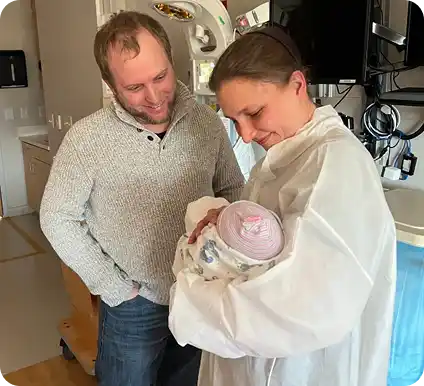
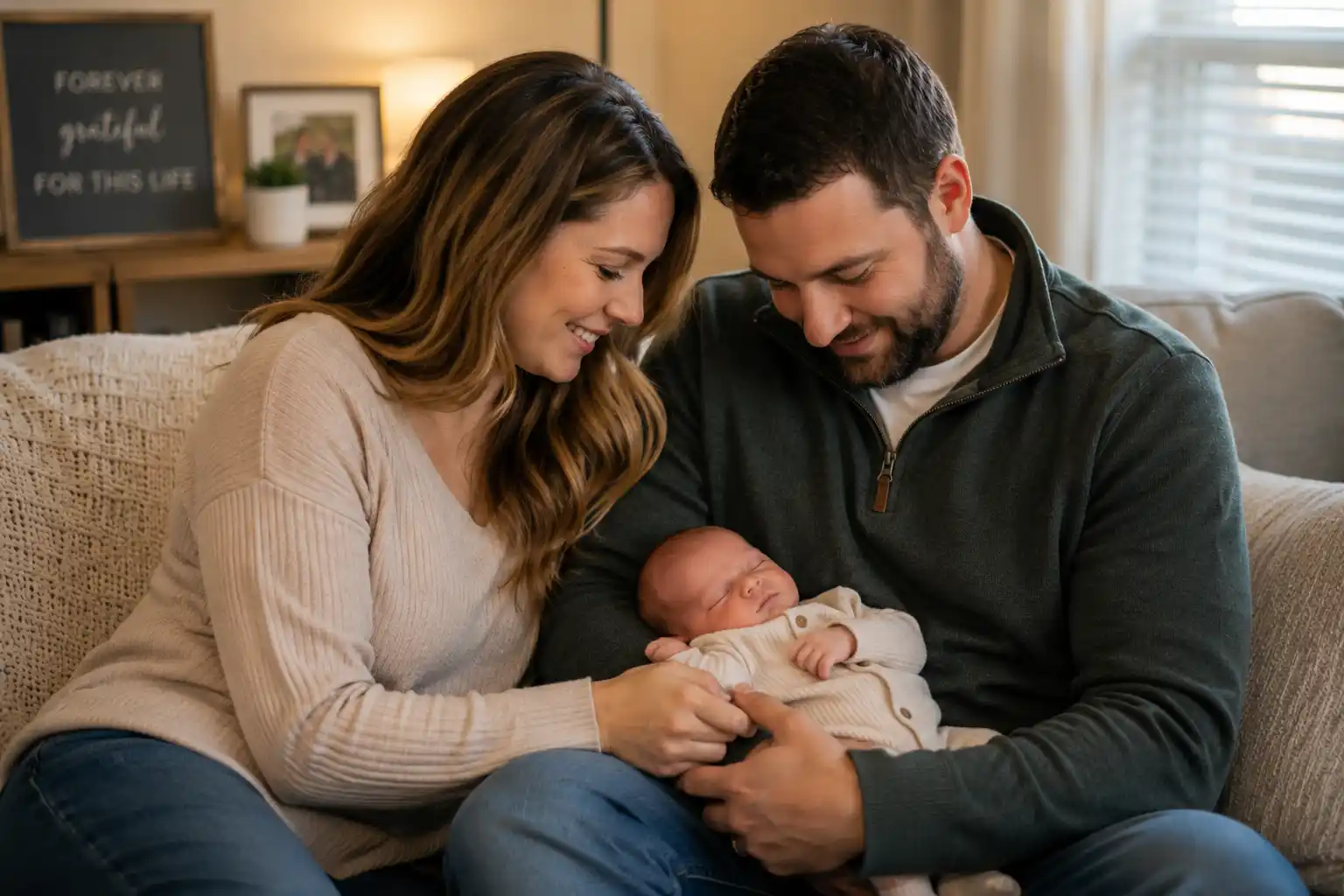
The hospital experience carried that same spirit. Ashley and Eric were in pre-op with the birth parents before the C-section. They could hear Colton crying from down the hallway within thirty minutes of his birth. The hospital provided a separate bonding room, and the birth parents asked Ashley and Eric to start using it right away. Contact has continued through Hearts Connect since placement, with messages exchanged multiple times a week. Research from American Adoptions shows that adolescents with regular contact with their birth family report greater satisfaction with their adoptions than those without ongoing connection (American Adoptions). Ashley and Eric are not waiting until Colton is a teenager to build that foundation. They are already building it, thirty-two days in.
Definitions
Endometriosis: A condition in which tissue similar to the uterine lining grows outside the uterus, often causing pain, inflammation, and in many cases, infertility.
Intrauterine Insemination (IUI): A fertility procedure in which prepared sperm is placed directly into the uterus to increase the chances of fertilization. Timing with ovulation is a key factor in its success.
Home Study: A required assessment process completed by a licensed social worker that evaluates a family's home, background, and readiness to adopt. It typically involves interviews, home visits, and documentation review.
Open Adoption: An adoption arrangement in which birth parents and adoptive families maintain some form of ongoing contact, ranging from letters and photos to in-person visits.
HELOC (Home Equity Line of Credit): A line of credit secured against the equity in a home, commonly used by adoptive families as one component of adoption financing.
Federal Adoption Tax Credit: A non-refundable federal tax credit that helps offset qualifying adoption expenses. For tax year 2025, the credit covers up to $17,280 per child.
Gift of Adoption: A nonprofit organization that provides grants to families in the final stages of adoption who face financial hardship in completing the process.
Ashley and Eric Felton's story is not a highlight reel. It is a full account of what it takes to get to the other side of infertility, financial pressure, and the fears that come with opening your family to something new. Their son Colton arrived surrounded by more love than Ashley and Eric ever expected to find.
To hear the full conversation, listen to this episode of Voices of Adoption and subscribe wherever you get your podcasts. No matter where you are in your journey, you'll find people who understand.
#VoicesofAdoption #OpenAdoption #AdoptionJourney #AdoptiveParents #AdoptionCost #AdoptionFinances #Endometriosis #InfertilityToAdoption #BirthParents #HeartToHeartAdoptions #AdoptionCommunity #AdoptionGrants #FederalAdoptionTaxCredit #GiftofAdoption #HeartsConnect
Follow or Subscribe to Voices of Adoption wherever you listen:
Website | YouTube | Twitter/X | Instagram | Facebook | TikTok | LinkedIn
Follow Nathan Gwilliam: LinkedIn
Follow Donna Pope: LinkedIn
Follow Ashley and Eric Felton: Hearts Connect