Behavior Is Communication and What It Means for Adoption

Voices of Adoption with host Donna Pope brings the adoption triad together one conversation at a time, giving birth parents, adoptees, and adoptive families a place to be heard. In this episode, Donna welcomes autism advocate Sara Bradford for a conversation about acceptance, curiosity, and what it means to truly see a child.
A Diagnosis That Helped a Whole Family
Sara Bradford did not set out to become an autism advocate. Her journey began in 2010, when her son was identified with autism at just 14 months old. As she learned to support him, she started recognizing the same traits in other members of her family, accommodations she had been making for years without naming why. Her husband fit the picture. Her daughter was identified at eight with dyslexia, autism, and ADHD. And eventually, Sara asked the question that had quietly followed her for years: Where do I fit in. Testing gave her the answer: autism, ADHD, dyslexia, and anxiety she has since worked through. Today, autism is far more visible than it once was, with about 1 in 31 children identified with autism spectrum disorder (CDC).
What surprised Sara most was how invisible her own experience had been. As a child she had oversensitive hearing and tiny outer ears, a condition called microtia, and the sound of a garbage truck could physically hurt her. When she hid, the adults around her told her to stop being sensitive. That pattern of being misread is common for girls, in part because autism is identified more than three times as often in boys as in girls (CDC), which means many bright, emotionally tuned-in girls grow up labeled dramatic instead of understood. Naming what was actually happening did not shrink Sara. It finally let her make sense of her own life.
Curiosity Changes the Way You Parent
The lesson Sara keeps returning to is that a parent can be the guide while still letting the child lead. The tool that makes that possible is curiosity. Instead of asking what is wrong with a child who is struggling, she asks why this child is behaving this way, and what this environment is asking of them. That single shift moves a hard moment out of conflict and into understanding, and it gives a child the thing every human is reaching for, which is to be understood for who they are.
For adoptive families, that mindset is exactly the work in front of them. A child who joins a new family arrives with a history, a wiring, and a way of seeing the world that the parents are still learning. Curiosity asks them to set aside any expectation of who the child should be and to get to know the child who is actually there. The need is real and ongoing, with more than 108,000 children in foster care eligible for adoption at last count (Congressional Coalition on Adoption Institute). Meeting any one of them well starts the same way Sara describes, with a parent willing to ask questions before drawing conclusions.
Acceptance Turns Difference Into Belonging
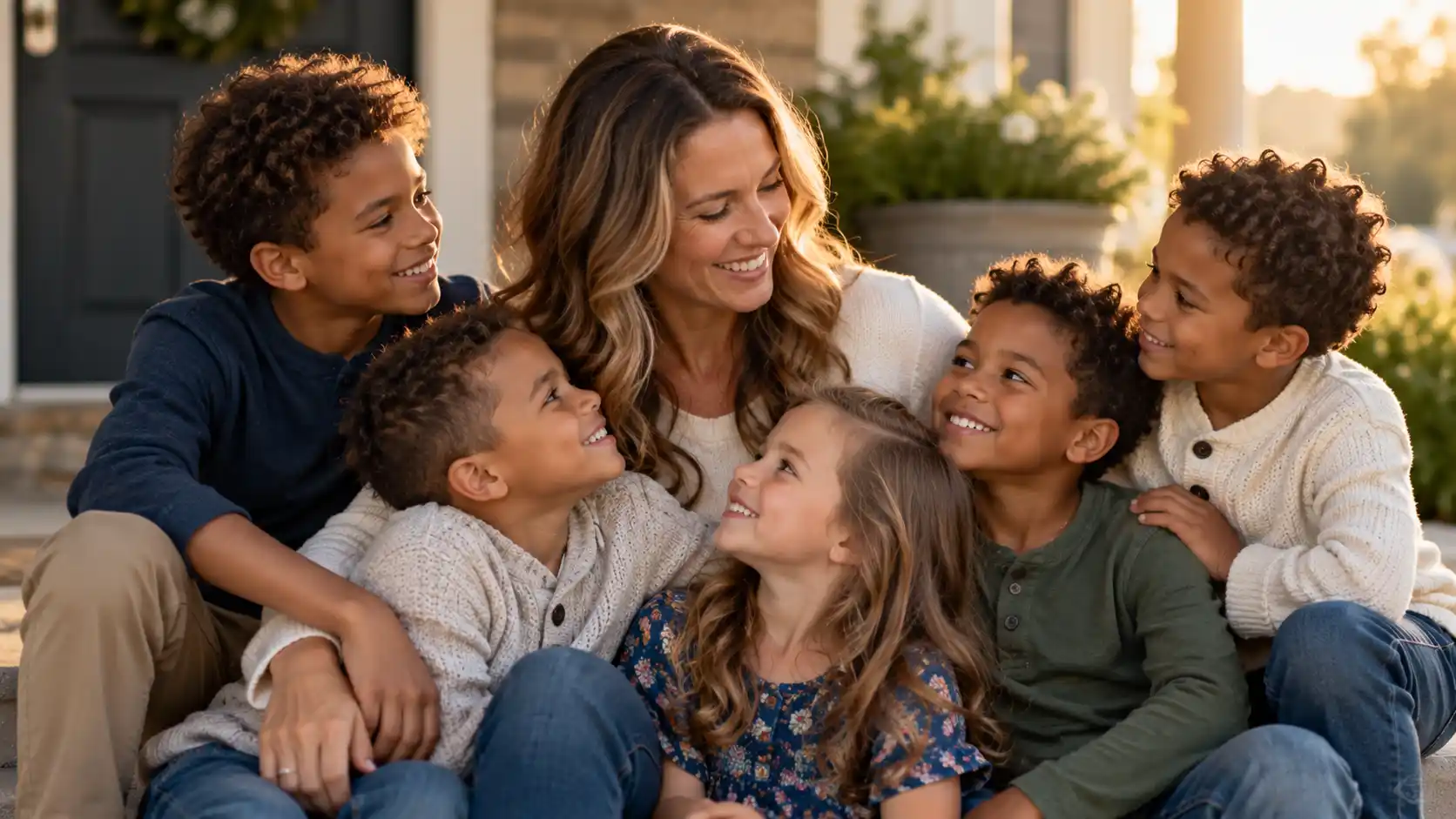
Sara has a memorable way of describing all of this. Normal, she says, is a dryer setting, not a standard anyone has to meet. She is careful to add that she does not think everyone is a little autistic, only that every person on earth is genuinely their own individual. When families learn to enjoy those differences rather than smooth them away, the whole household changes. For Sara and her husband, understanding their own minds let them see past struggles as sensory experiences rather than personal failures, and that reframing brought them closer.
The autism spectrum itself is wide, ranging from people who need full daily support to people whose support needs are lighter and easy to miss. Sara lives on the part of the spectrum that often goes unrecognized, and her son lives with much higher support needs. Holding both of those truths in one family taught her that a label is only useful insofar as it helps people understand and accept one another. Belonging, not normalcy, is the goal, and belonging begins the moment a person is finally seen for who they are.
Advocacy That Makes Children Safer and Seen
Sara turned her experience into tools other families could use. She wrote a children's book about DJ the Bear, a bear with autism, so that her son's classmates could understand why a friend might move or play differently and meet him with acceptance instead of fear. She built an online support group for parents and answered calls from families any day of the week. When a parent in that group described a frightening moment, a non-speaking child who was misread by a stranger, Sara created free vehicle profiles that give first responders a child's photo, communication style, and needs at a glance. She has sent hundreds across the country and is now developing an app to make that information instant.
Underneath every project is one idea: behavior is communication. Sara encourages parents to read a child's actions as a message rather than a problem, to trust their gut over a stranger's prediction, and to refuse any forecast that puts a ceiling on a child's future because people show their capacity to grow far beyond what others expect. Adoptive families do not have to carry that work alone. Support exists and most families use it, with 94% of parents who adopt from foster care relying on adoption subsidies or post adoption services (Congressional Coalition on Adoption Institute).
Terms Worth Knowing
Neurodivergent describes brains that work differently from what is considered typical, including autism, ADHD, and dyslexia.
AUDHD is a shorthand for having both autism and ADHD.
The adoption triad refers to the three groups connected by every adoption: birth parents, adoptees, and adoptive families.
If this conversation meets you where you are, Voices of Adoption is here for you. No matter where you are in your journey, you'll find people who understand.
Download Your FREE Guide to Adoption at VoicesofAdoption.org, and like, share, and subscribe so more families can find their way here too.
#VoicesOfAdoption #PodUp #PodAllies #AdoptionTriad #Neurodiversity #AutismAcceptance #AdoptiveFamilies #BirthParents #Adoptees #ParentingWithCuriosity
Follow Voices of Adoption: Website | YouTube | Instagram | Facebook | X | TikTok | LinkedIn
Connect with Donna Pope: LinkedIn
Connect with Sara Bradford: Website | Instagram | Facebook | LinkedIn