Birth Father Involvement After Placement Actually Works

Jason Coombs did not want to be a father. Not when he was twenty-six years old, four felony charges deep, and watching his life come apart from a substance use disorder he could not control. Not when he got the text message that read "Lisa's pregnant and the baby's yours." Not when he walked into the hospital to meet the family that would adopt his son. For nine months of that pregnancy, Jason did what most birth fathers in his situation do. He disappeared.
In this episode of Voices of Adoption with host Donna Pope , Jason describes how the birth of his son Nathan reshaped everything he believed about love, recovery, and his own worth, and why the open adoption relationship his family built together has become one of the strongest case studies for birth father involvement done well.
The Birth Fathers Who Disappear From the Story Â
The birth father voice is the quietest one in the adoption triad. Resources on the triad continue to expand, but birth father research, representation, and support services lag significantly behind those available to birth mothers, adoptees, and adoptive parents ( National Council for Adoption ). What is documented suggests the default response among birth fathers facing an unplanned pregnancy is flight, not engagement. Jason describes how easy it was for him to slip into the shame, denial, and "the baby can't be mine" narrative that took over the moment he learned Nathan's birth mom was pregnant.
He had what he believed were good reasons. Four felony charges from a doctor running an illegal opiate ring in Salt Lake City. A failed marriage. Periods of homelessness, jail, and street drugs. He did not feel ready, capable, or worthy of being anyone's father. In his son's adoptive family today, none of the other birth fathers stayed connected to their children. Jason understands why. The shame is heavy, the responsibility looks impossible, and the easier path is to vanish. What he could not see at the time was that the cost of disappearing falls hardest on the child.
The Choices That Made This Open Adoption Different Â
Open adoption is now the dominant form of domestic infant adoption in the United States, with the overwhelming majority of placements involving some form of ongoing contact between birth families and adoptive families, a major shift from the closed adoption norms of earlier decades ( Child Welfare Information Gateway ). But openness alone does not guarantee a relationship that holds. What made Jason's adoption story work was a combination of intentional choices made by Nathan's birth mom, the adoptive Martin family, and eventually Jason himself.
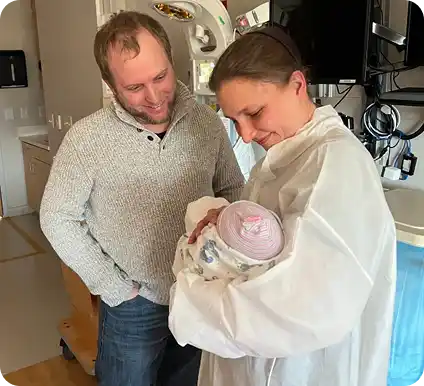
Nathan's birth mom included Jason in the pregnancy from early on, sending him updates and inviting him to dinner to meet the Martins. She created space at the hospital for him to sit beside her and hold his son, even when her family did not want him in the room. The Martins kept the door open in the years that followed, mailing Polaroids and letters about Nathan's milestones, inviting Jason to soccer games and barbecues, buying matching mini soccer balls so father and son could play together at family gatherings. Jason credits one principle for why it all worked. Strong fences make great neighbors. Safety came first. Then openness.
The Promise He Wrote on a Hospital Floor Â
Nathan was born with respiratory issues and spent his first week of life in the hospital on oxygen. Standing at the nursery glass watching his newborn son fight to breathe, Jason saw something clearly for the first time in years. He was squandering a life. His son was fighting for one. Jason went downstairs, grabbed a legal pad and a pen from a hospital office, and wrote Nathan a letter. He introduced himself. He told Nathan he was going to change. He asked that one day, when Nathan was old enough, they might meet again as different men. Long-term recovery from substance use disorder is achievable, and millions of Americans are currently living in sustained recovery ( SAMHSA ).
Two years of continued use followed before Jason got sober for good on March 19, 2009. In treatment, a counselor asked him to write a letter to God. As he read it aloud, kneeling in front of a green love seat in a rehab office, Jason had a vision of his son Nathan and heard the words "I love you the way you love Nathan." That moment, he says, was when he understood unconditional love for the first time. Adoptees and birth parents alike often describe naming their experience as the turning point that unlocks healing, a finding confirmed across decades of adoption-related counseling research ( The Professional Counselor ). Jason names his birth father experience the same way. Without Nathan, he says, he would not be alive.
What Birth Father Involvement Looks Like After Eighteen Years Â
Seventeen years after he last used, Jason runs Brick House Recovery, the treatment program he founded to teach his clients the three elements of hope he discovered through Nathan's birth. Visualize the goal. See the path. Believe you have what it takes. Nathan, now almost nineteen, introduces both Jason and his adoptive father Dave as "my dad" when the three of them are together. Jason's wife and twins have embraced Nathan and the Martin family as their own. The Martins still invite Jason to milestones. None of this outcome was inevitable. All of it was built.
The lesson Jason draws from eighteen years of birth father involvement is that adoptees thrive when the adults around them choose to show up, year after year, with honesty and consistency ( Brick House Recovery ). Birth father involvement after placement is not always possible, and Jason is the first to say that strong fences and safety must come first. But when conditions allow it, when everyone is healthy enough to participate, birth father involvement becomes a gift to the child, a path to healing for the father, and a model the adoption community needs more of.
Definitions Â
Birth Father: The biological father of a child who has been placed for adoption. Birth fathers are members of the adoption triad and carry distinct experiences, emotions, and needs that are often underrepresented in adoption research and support resources.
Open Adoption: An adoption arrangement in which birth families and adoptive families maintain some form of ongoing contact, ranging from letters and photos to phone calls and in-person visits. Open adoption is now the dominant form of domestic infant adoption in the United States.
Adoption Triad: The three groups of people most directly affected by an adoption, birth parents, adoptees, and adoptive parents. Each member of the triad carries a distinct perspective, set of needs, and emotional journey related to the adoption.
Substance Use Disorder: A medical condition characterized by an inability to control the use of substances despite harmful consequences. Long-term recovery from substance use disorder is achievable, and millions of Americans are currently living in sustained recovery.
Brick House Recovery: The treatment program founded by Jason Coombs, focused on helping individuals and families navigate substance use disorder through a framework that combines visualizing a goal, seeing a path, and building self-efficacy.
If you are a birth father carrying shame from a decision you made years ago, an adoptive family wondering whether to keep the door open, or anyone in the adoption community trying to understand how birth father involvement can actually work, this episode delivers a story you will not hear anywhere else.
Listen to Jason Coombs' full conversation with Donna Pope on Voices of Adoption podcast and discover what becomes possible when a birth father chooses to show up.
Download Your FREE Guide to Adoption at VoicesofAdoption.org. Like, share, and subscribe to spread the word.
And if you know someone walking through the birth father experience, the recovery journey, or the long work of building an open adoption, share this episode. No matter where you are in your journey, you'll find people who understand.
Follow or Subscribe to Voices of Adoption on your favorite platform
Website: VoicesofAdoption.org | YouTube: @VoicesofAdoptionShow | Twitter/X: Voices_Adoption | Instagram: Voicesof_Adoption | Facebook: Voices of Adoption | TikTok: @Voices_of_Adoption | LinkedIn: @Voices-of-Adoption
Follow Nathan Gwilliam
LinkedIn: @nathangwilliam
Follow Donna Pope
LinkedIn: @donna-pope-41652ba
Follow Jason Coombs
LinkedIn: @jasondcoombs
Follow Brick House Recovery
Website: brickhouserecovery.com | YouTube: @Getunhookedpodcast | Instagram: @brickhouserecovery