Adoption Profile Books That Make a Real Connection

Most adoption profile books look the same. That is not a criticism of the families who create them. It is a reflection of how high the stakes feel when a birth parent is reviewing your pages and deciding if you are the right fit for their child. The instinct is to hire a photographer, select the most flattering images, and present the most polished version of your life. In this episode of Voices of Adoption with host Donna Pope, Cory and Libby Rhoads share the opposite approach that worked for them. Rather than staging scenes or curating a picture-perfect narrative, the couple filled their profile book with candid selfies, snapshots of them playing with their dog, and personal details like their shared love of Harry Potter. They reviewed other families' books and noticed many had a similar, overly produced quality. Their strategy was to let their personality lead. The result was a profile that felt less like a brochure and more like a window into their daily life.
Research supports the idea that authenticity matters in the adoption matching process. According to the Evan B. Donaldson Adoption Institute (Evan B. Donaldson Adoption Institute), the vast majority of agencies report that expectant parents choose their child's adoptive parents, which means the profile book is often the first and most significant point of connection. A 2012 survey found that between 76 and 100 percent of expectant parents at most agencies made their own selection (American Adoptions). For Libby and Cory, the personal elements in their book, the dog photos, the Harry Potter reference, were exactly what Penny's birth mother connected with. The match happened in under 24 hours after their very first phone call.
 The Emotional Weight of Adoption Preferences  Â
One of the hardest parts of the adoption process is setting preferences and then living with them. Libby and Cory describe the constant internal negotiation of wanting to say yes to every child while also being honest about what their family was set up to support. Their home, for example, was not fully accessible, so a child who needed a wheelchair or assistive devices would have required a move, a new home study, and significant restructuring. These are real logistical considerations that carry emotional weight. The couple emphasizes that being honest about your limits is not selfish. It is responsible, because taking on more than you can realistically manage creates complexity for everyone down the road.
The domestic infant adoption process in the United States typically takes one to two years from application to finalization, with wait times varying based on factors like flexibility in preferences, geographic reach, and agency resources (Tapestry Adoptions). Approximately 115,000 adoptions occur annually in the United States, spanning domestic infant, foster care, international, and kinship placements (Tapestry Adoptions). For families navigating this timeline, the emotional side of waiting, being shown situations, declining when the fit is not right, and managing hope, can be the most taxing part of the entire journey. Libby describes the process as requiring deep self-reflection and many honest conversations between partners about what they could take on and what they could not.
 Open Adoption as an Ongoing Relationship  Â
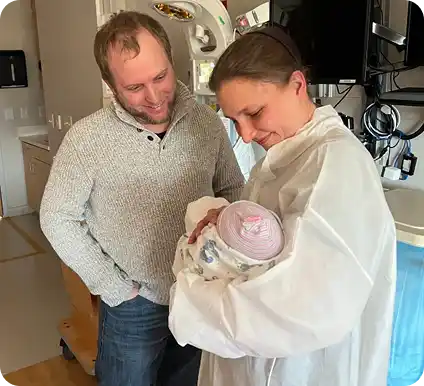
Libby and Cory's relationship with Penny's birth mother did not end at the hospital. It continues today through regular updates on the Heart to Heart app, annual FaceTime calls on Penny's birthday, and a framed photo of her birth mom displayed in Penny's room. The couple sees this openness as a natural part of their family structure, not an obligation but a meaningful connection that enriches Penny's life and gives her birth mother the ongoing reassurance that her child is thriving. Their approach aligns with a growing body of research that shows open adoption is now the standard, not the exception. Roughly 95 percent of private infant adoptions today have some degree of openness, a complete reversal from the mid-20th century when nearly all adoptions were closed by default (American Adoptions).
The Minnesota-Texas Adoption Research Project, one of the longest-running studies on the subject, found that adoptive parents in open adoptions showed greater compassion for birth parents and a stronger sense of entitlement as parents, and that open communication between birth and adoptive parents increased the child's social-emotional outcomes (Adoption Support Alliance). Separately, research published by the National Council for Adoption found that birth mothers who had ongoing contact with their children reported less grief, worry, and regret than those with no contact, and that open adoptions resulted in higher overall satisfaction and better psychological outcomes (National Council for Adoption). For Libby and Cory, the data confirms what they already feel in practice. Penny's birth mother is a part of their family, and that connection benefits everyone.
 Finding Community After Adoption  Â
One of the most underrated pieces of adoption advice in this episode is the importance of finding community. Libby and Cory describe how the agency that conducted their home study continues to host meetups for adoptive families in the DC area, including a kids-under-six group that meets every couple of months. Through these gatherings, Penny has met other children who have also been adopted, including one child who is now in her preschool class. Meanwhile, Libby and Cory have built friendships with other adoptive parents who understand the specific landscape of raising a child through adoption. Cory also talks about how being open about their adoption journey within his art community led to unexpected connections, with friends, colleagues, and acquaintances sharing their own adoption stories.
The California Long-Range Adoption Study found that 73 percent of adoptive parents reported being very comfortable with contact in their open adoptions, and that connection with other adoptive families contributed to that comfort over time (American Adoptions). Post-adoption support, including peer support groups, has been shown to increase parenting confidence, strengthen family bonds, and improve outcomes for both parents and children (Texas Department of Family and Protective Services). For families considering adoption, the message from Libby and Cory is clear. You do not have to do this alone, and actively seeking out people who share your experience makes the entire journey more sustainable.
 Definitions  Â
 Adoption Profile Book:  A document created by prospective adoptive parents, typically including photos, letters, and personal details, shown to expectant parents considering adoption to help them select a family for their child.
 Open Adoption:  An adoption arrangement in which the birth parents and adoptive parents have some form of ongoing contact after placement, which may include letters, photos, phone calls, or in-person visits.
 Home Study:  An evaluation process required for adoption that assesses the prospective adoptive parents' home environment, background, finances, and readiness to parent, typically conducted by a licensed social worker.
 ICPC (Interstate Compact on the Placement of Children): A legal agreement between all 50 U.S. states governing the placement of children across state lines, ensuring that prospective placements are safe and suitable before a child can be taken to a new state.
 Post-Adoption Services:  Ongoing support services available to adoptive families after placement, which may include counseling, support groups, training, respite care, and crisis intervention.
 Matching:  The process by which a birth parent or expectant parent reviews prospective adoptive family profiles and selects the family they want to raise their child.
If you are considering adoption and want practical guidance on building an authentic profile, navigating the emotional side of preferences, and creating an open adoption that benefits everyone involved, this episode delivers the insights you need to take your next step with confidence.
#Adoption #AdoptiveParents #OpenAdoption #AdoptionProfile #AdoptionAdvice #AdoptionCommunity #AdoptionJourney #DomesticAdoption #AdoptionStory #HeartToHeartAdoptions #VoicesOfAdoption #AdoptionSupport #BirthMom #AdoptionMatching #AdoptionPreferences #FertilityToAdoption #AdoptionProfileBook #AdoptionWaitTimes #AdoptiveFamily #DCFamilies
Follow or Subscribe to Voices of Adoption on your favorite platform -
Website:Â VoicesofAdoption.org | YouTube:Â @VoicesofAdoptionShow | Twitter/X:Â Voices_Adoption | Instagram:Â Voicesof_Adoption | Facebook:Â Voices of Adoption | TikTok:Â @Voices_of_Adoption | LinkedIn:Â @Voices-of-Adoption
Follow Nathan Gwilliam - LinkedIn:Â @nathangwilliam
Follow Donna Pope - LinkedIn:Â @donna-pope-41652ba
Follow Libby Rhoads - LinkedIn: @Libby-Rhoads | Profile: Libby-Rhoads